Marmalade Grove
How do you turn a beautiful citrus brand into one people can almost taste?
Most food brands are way too product-centric and reek of promotional messaging. Marmalade Grove needed their brand to become a belief system their best buyers could live inside.
-
Marmalade Grove wanted clearer, higher-performing email marketing. But the deeper challenge was that the brand looked more like a fashion or lifestyle label than a premium citrus company, creating the risk of attracting people who admired the aesthetic without feeling compelled to buy.
-
The messaging leaned heavily on promotions, urgency, and product beauty, but never fully answered why someone should order citrus online instead of buying it nearby. The brand needed stronger differentiation, clearer buyer segmentation, and a more tangible emotional reason to care.
-
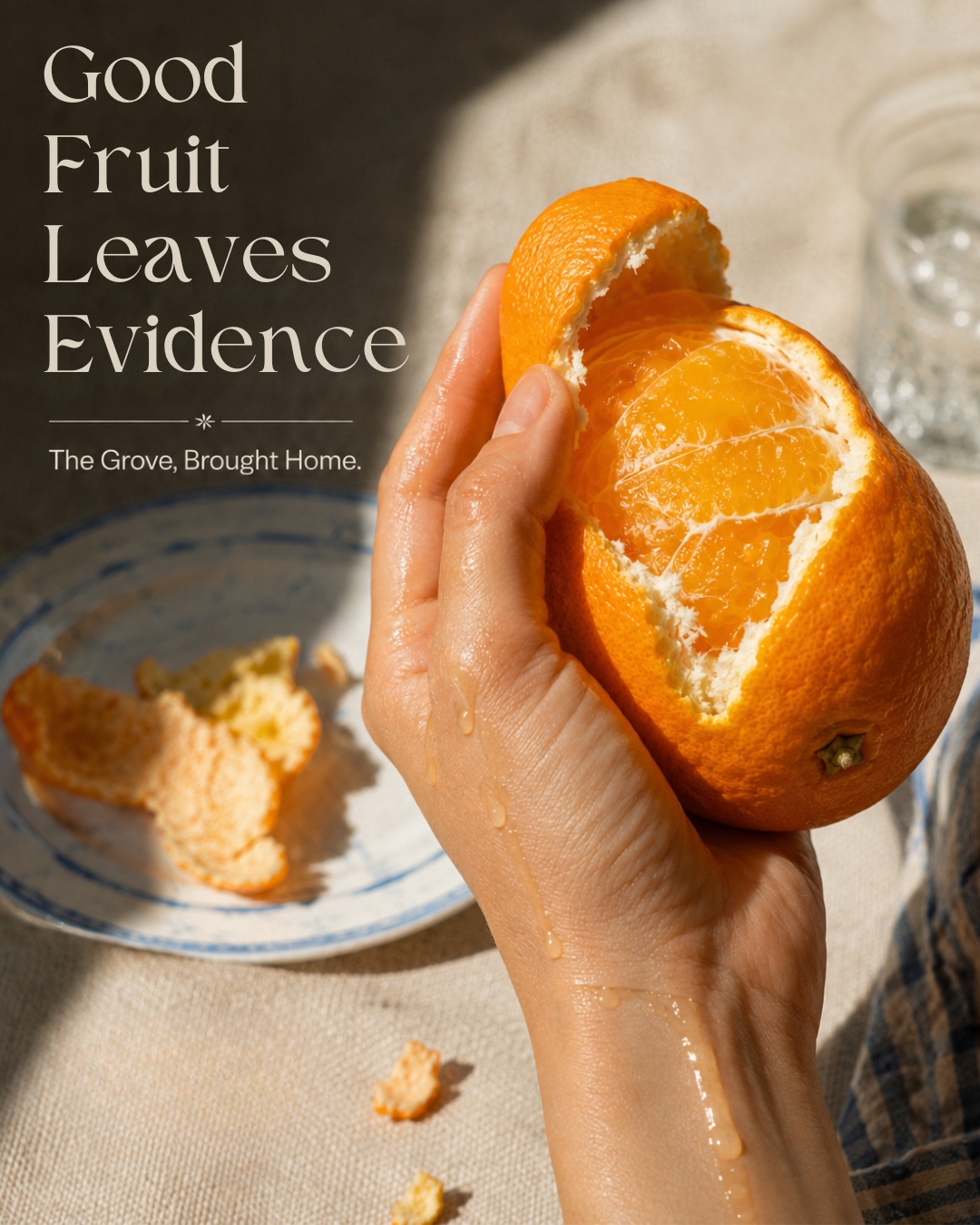
We repositioned Marmalade Grove around sensory memory, seasonal freshness, and the experience of bringing the grove into the home. The central ideas became “The Grove, Brought Home” and “Enjoy a nice squeeze, from our hands to yours” inspired by sticky fingers, torn peel, citrus aroma, and the familiar mess of eating a great orange.
-
The concept included a more food-forward identity, an adaptable MG monogram, harvest stamps, redesigned jar and shipping packaging, handwritten inserts, sensory campaign imagery, social content, and an email that reads like a note from the farm rather than a standard promotional blast.
-
A beautiful brand does not automatically create customer need. The redesign aimed to make Marmalade Grove feel not only premium and visually distinctive, but craveable, useful, and emotionally relevant to the people most likely to buy again.
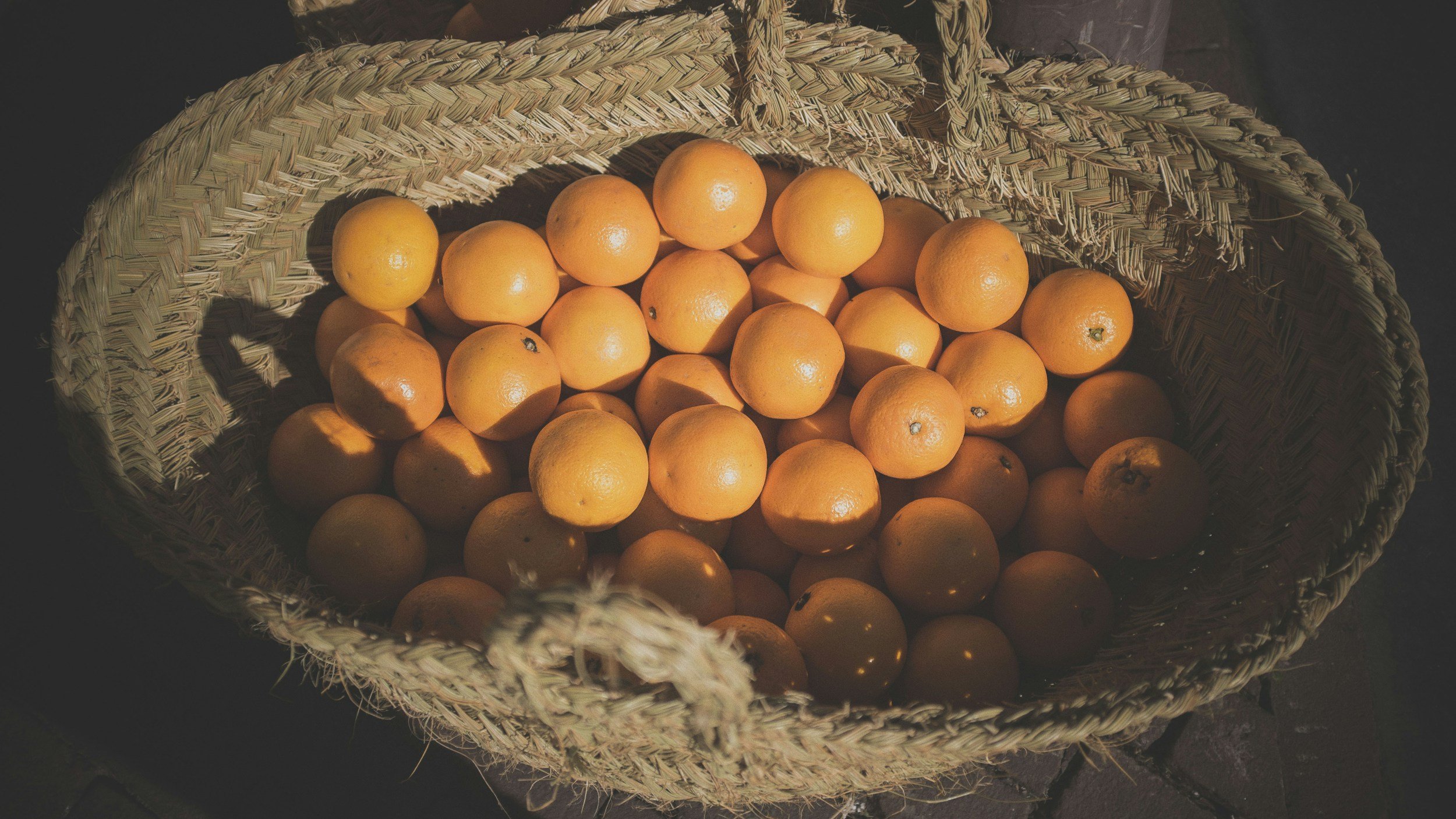
01 - Context The brief asked for a clearer email, but the scope was beyond that.
Marmalade Grove is a premium citrus brand founded in 2021 that grew to 40k customers and roughly 2M in revenue, with about half of traffic and sales coming from email. A very small in-house team runs everything from photography to development, which means “test and learn” ideas tend to get bolted on.
They posted an Upwork role for an email marketing copywriter. The ask on paper appeared simple, take a proven email template from Peach Truck (a large peach brand with 40M in fruit sales) and run A/B tests using that visual style for Marmalade Grove.
The stated goal list seemed tidy:
Clearer visuals
Clearer copy
Stronger social proof
A direct CTA
More effective A/B testing
On the surface, they were hiring for email optimization. Underneath, the question was whether email growth had quietly stagnated because the buyer the brand was built for and the buyer actually on their list were no longer the same person.
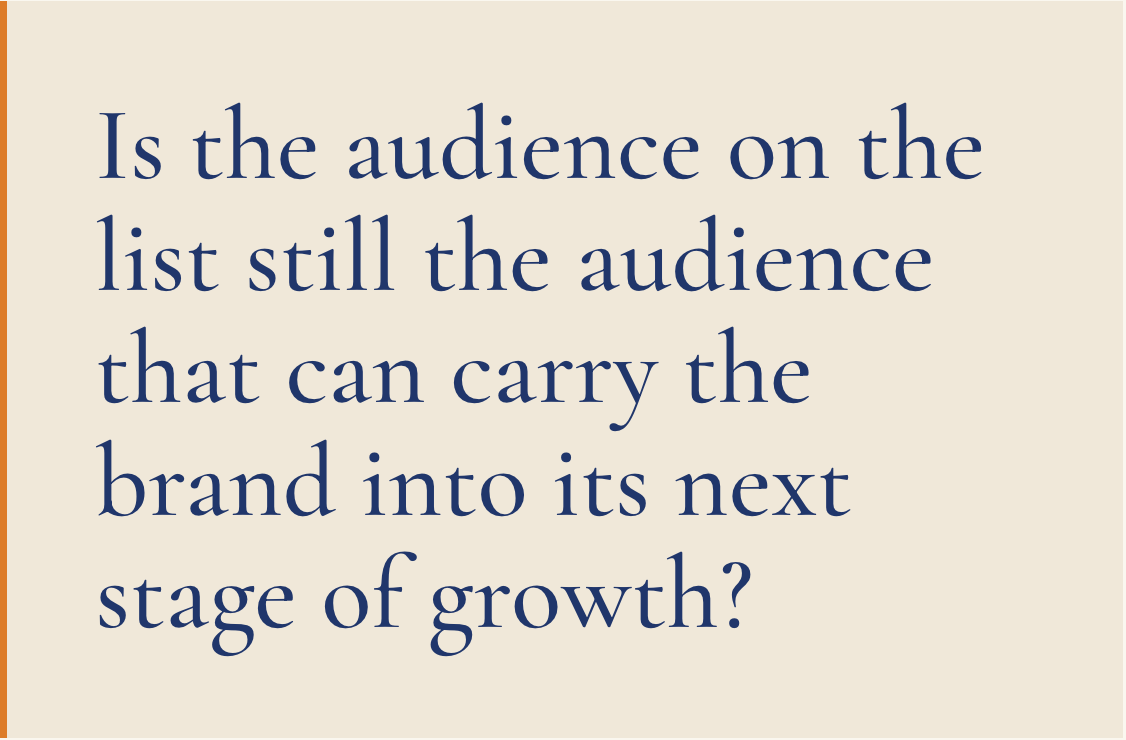
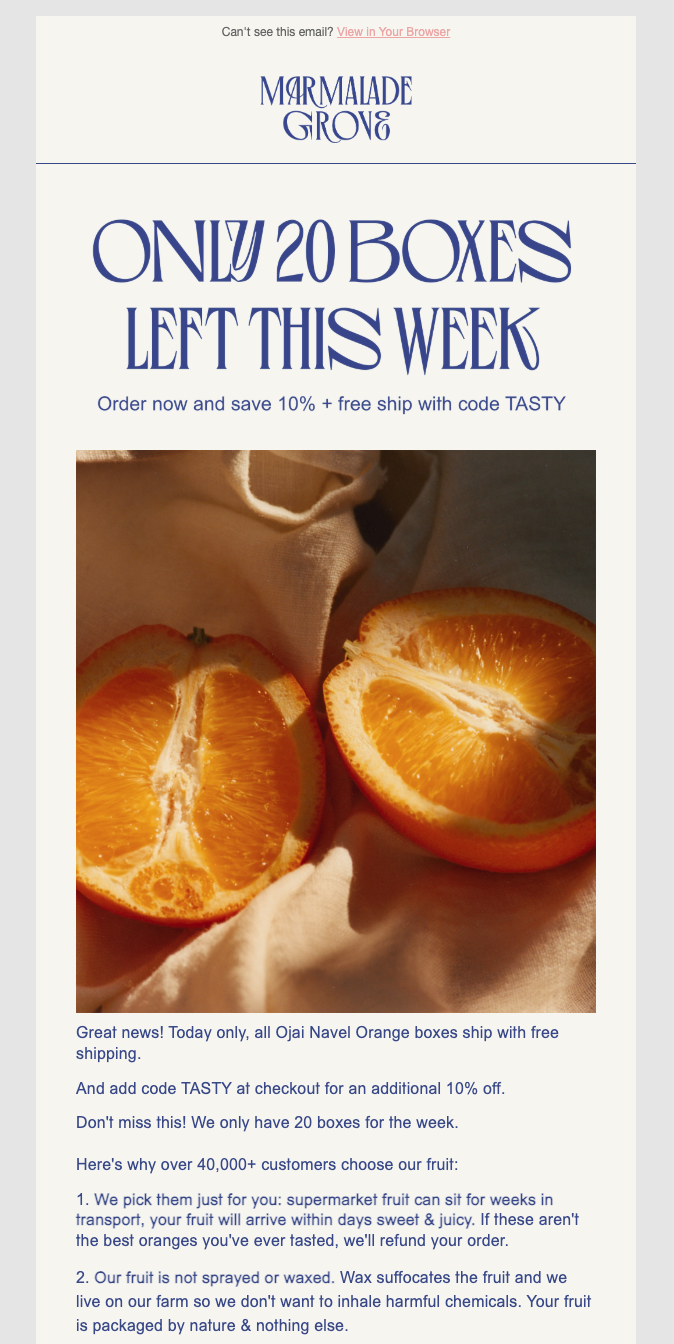
Marmalade’s current email design
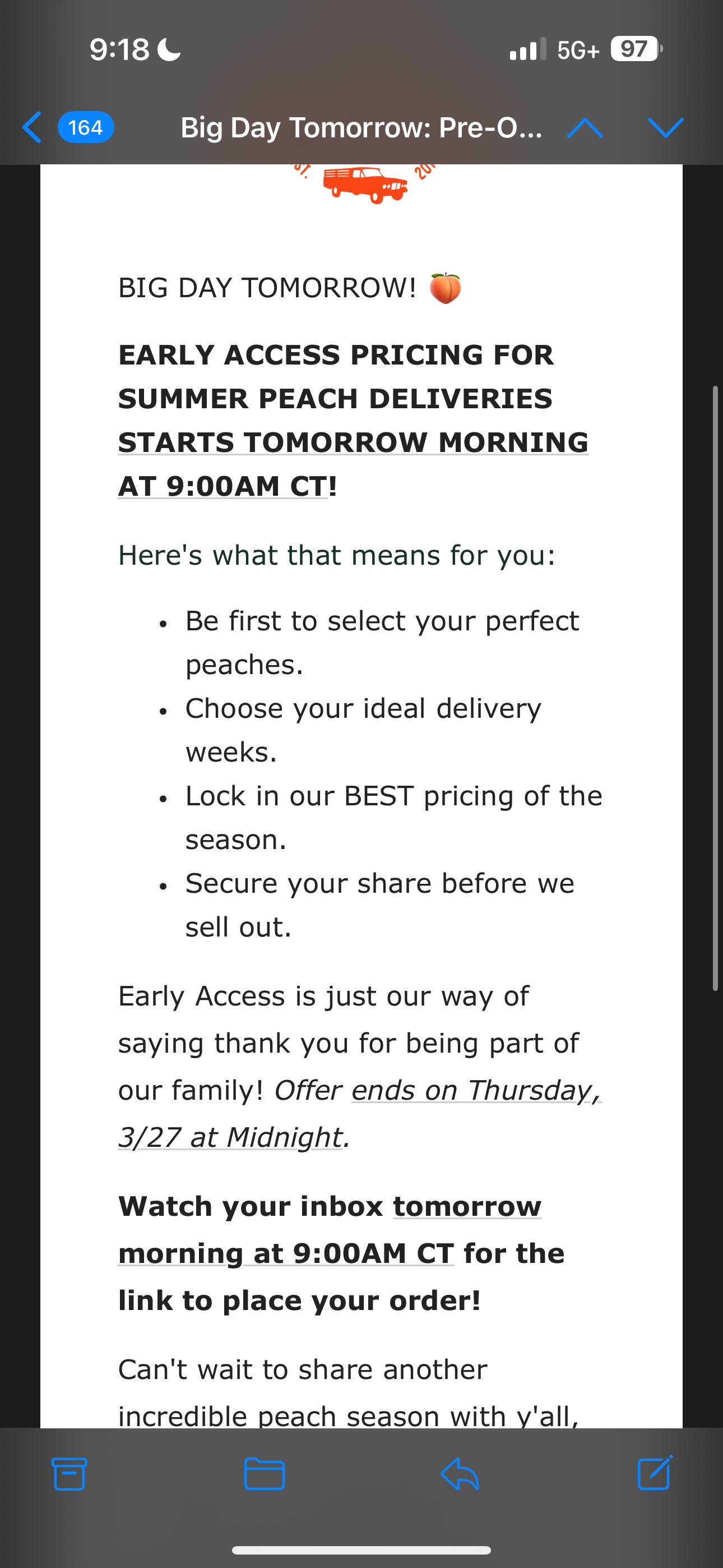
Peach Truck’s email design
To view the email in full screen, click here.
The original email led with urgency, discounts, and several overlapping reasons to buy.
The revised approach keeps conversion urgency but changes its source.
Instead of generic ecommerce pressure, urgency comes from peak flavor and seasonal availability.
The email should feel more like a note from the farm and less like a standard promotional blast.
Email Marketing Redesign

The original brand identity was visually attractive, but it created category confusion. Its typography and editorial styling could easily belong to an apparel company, boutique hotel, candle brand, or luxury lifestyle label. That aesthetic might attract people who like the brand’s look but do not have a strong reason to buy premium citrus online.This creates the risk of ICP drift, where the brand gathers admirers instead of repeat buyers.
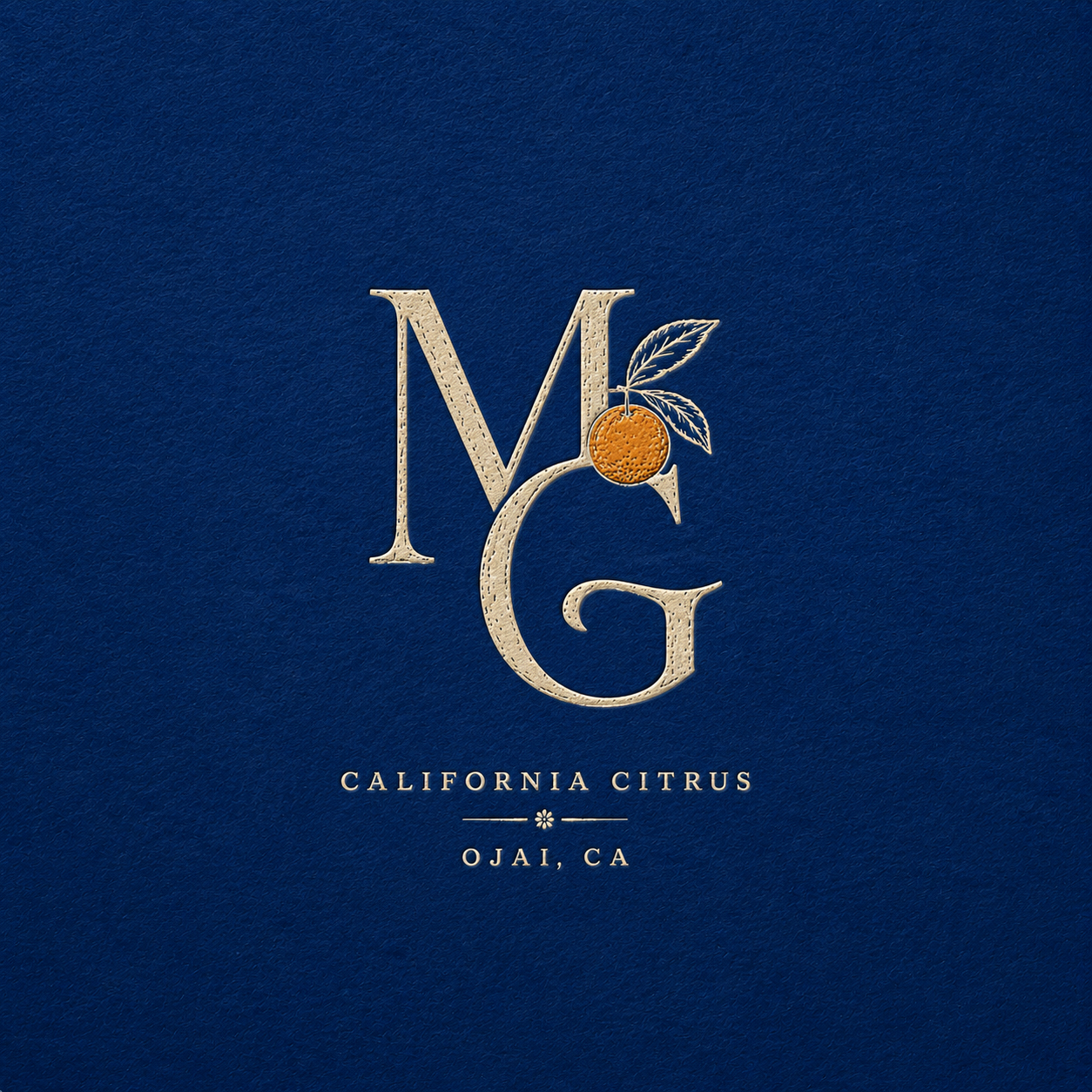
Redesign
The redesigned logo still captures that premium look while still having character. To bring that liveliness to the brand, we gave the logo some texture, so it can appear similar to the skin of an orange.
Campaign Creative
The campaign uses the physical evidence of eating good citrus as its central visual language
Diagnostic Work
Email & buyer analysis
If this were a full engagement, the diagnostic would start by analyzing the following datapoints:
Unsubscribe rate after the “peak” email period
Identify when performance started declining even while list size looked healthy.
Segmentation vs engagement
Map recurring personas on the list and identify which ones stayed subscribed and active longest.
Consumer vs wholesale subscribers
Marmalade runs a wholesale program. The first step is separating direct consumers from B2B buyers to stop sending everyone the same message.
Subscribers vs buyers
Identify who joined the list as a fan versus who joined as a paying customer, then analyze behavior and LTV for each segment.
Clicks-to-checkouts
Cross-reference email link clicks with Shopify order data to see which emails and which segments actually convert, and how often. Maybe a bit tedious, but worth it.
Creative and messaging audit
Both Marmalade and Peach Truck lead with promotions and urgency, which is standard in food where impulse buys drive volume.
Visually, Peach Trucks has a simple design that makes it reminiscent of a local bulletin flyer which may be “hit home” to its specific buyers.
Marmalade’s observation on having clearer visuals is pretty spot on, because our initial impression (looking from a buyer’s POV) is that it looks more fitting to an apparel brand or a lifestyle brand, down to its typography.
Marmalade’s copy is actually more buyer-centric and includes testimonials, but the emotional center is blurry. The tagline “A Feast for the Senses” sounds evocative but simultaneously makes the value prop harder to grasp.
This pointed to a broader issue where they were trying to borrow Peach Truck’s surface-level playbook without asking whether Peach Truck’s buyer, geography, and use cases matched Marmalade’s.
Social and brand audit
Marmalade’s Instagram has 68 posts, most of them are aesthetic shots of oranges that look like a Pinterest mood board. It is visually pleasing, yet emotionally empty. There is no lived-in world for the buyer to step into.
Missing pieces:
UGC content showing what Marmalade fruit actually looks like in a customer’s kitchen.
Behind-the-scenes content from the farm and harvest days.
Aspirational content for sustainability-minded people and chefs/culinary entrepreneurs experimenting with growing or cooking their own produce.
Content showing everyday usage of breakfast, cocktails, dessert, romantic dinner night, corporate gifting rituals.
The grid behaves like a brand moodboard. It needs to become a mini digital world where the buyer can see themselves using Marmalade’s products.
What Was Missing
Emotional repositioning.
The people ordering premium fruit online aren’t doing casual “shopping.” They are:
Reclaiming control over what they eat.
Tired of bland, possibly overhandled grocery-store fruit.
Building a fridge that says something about their values, which may be: health, taste, sustainability, care for family
The job of the email should be:
“Here’s your chance to reconnect with the real taste of citrus before this year’s harvest disappears again.”
That message gives the purchase seasonal urgency and identity weight. This encourages more impulse buys while still making buyers feel something by tapping into their core memories of eating fresh citrus produce. This also could be a good opportunity for Marmalade to experiment with sensory branding in its creative direction.
Right now Marmalade hints at this with “A Feast for the Senses,” but stops short of naming the tangible in everyday language and sensory details.
Instead of “A Feast for the Senses” —----------- “Enjoy a Nice Squeeze - From our hands to yours”
Diagnosis
Across email, website, and social, Marmalade’s story is overly product-centric and a bit hollow. The brand talks about oranges. The right buyers care about what those oranges allow them to feel like in their own lives.
Email is being treated like a transactional channel for promotions when it should be the backbone of a belief system that keeps high-LTV buyers subscribed, engaged, and proud to bring Marmalade into their homes and businesses.
Two specific gaps emerged:
There isn’t a clear separation between consumer, wholesale, and corporate gifting buyers in messaging and content.
No articulated key differentiator versus premium grocery and other citrus brands beyond “we ship you fruit.”
This leaves us with a deep question:
Why would a high-income, high-access buyer subscribe to citrus delivery when they can reach ten different grocery stores within ten miles that all sell oranges?
If Marmalade cannot answer that, a template from Peach Truck isn’t likely to save their unit economics.
A beautiful brand does not automatically create customer need. Marmalade Grove needed to move beyond being a citrus brand people admired and become one they could smell, remember, crave, and make part of their lives.The proposed system connects the grove to the home through sensory memory, the joyful evidence left behind by genuinely good fruit.
Final Takeaway
Disclosure:This is an independent speculative case study created for portfolio and educational purposes. It was not commissioned by and is not affiliated with Marmalade Grove.